
Project Brief
In this lesson, we'll explore the project brief for our event ticketing platform, aiming to understand the requirements of the system we are to build.
Project Overview
Let's break down the main components of our event ticketing system.
Our system needs to handle event creation, ticket sales, sales monitoring, and ticket validation -- the complete event management lifecycle.
The platform will serve three types of users:
- Event organizers
- Event attendees
- Event staff
Each user type has their own needs, and way of using the system.
User Story Analysis
Event Creation Requirements
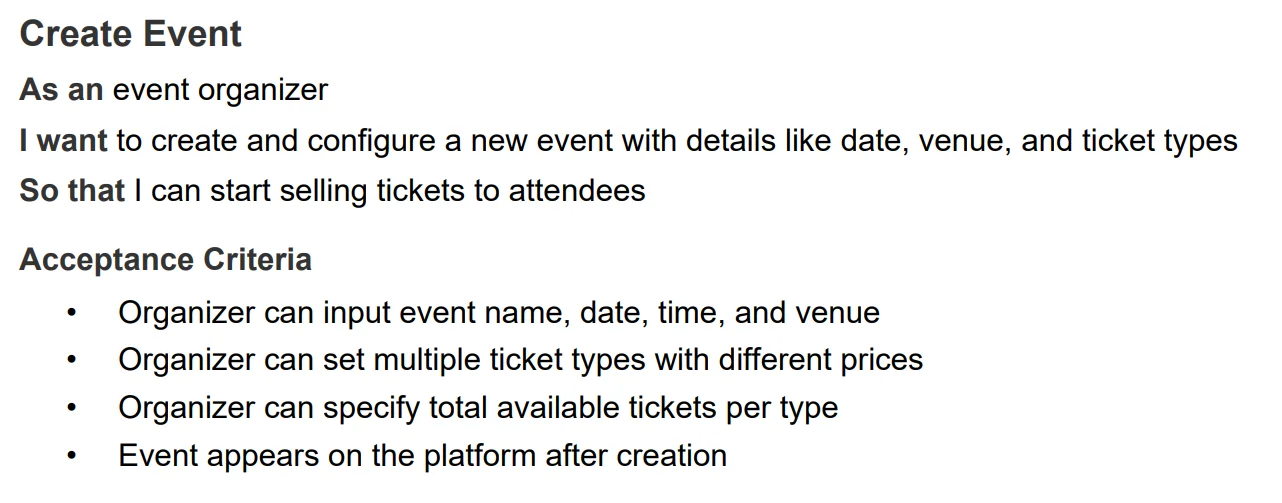
The event creation story focuses on organizers setting up new events.
We'll need to design a robust data model to store event details including:
- Name, date, time, and venue
- Multiple ticket types with varying prices
- Ticket quantity limits per type
The system must maintain data integrity to prevent issues like duplicate events or invalid ticket configurations.
Ticket Purchase Flow
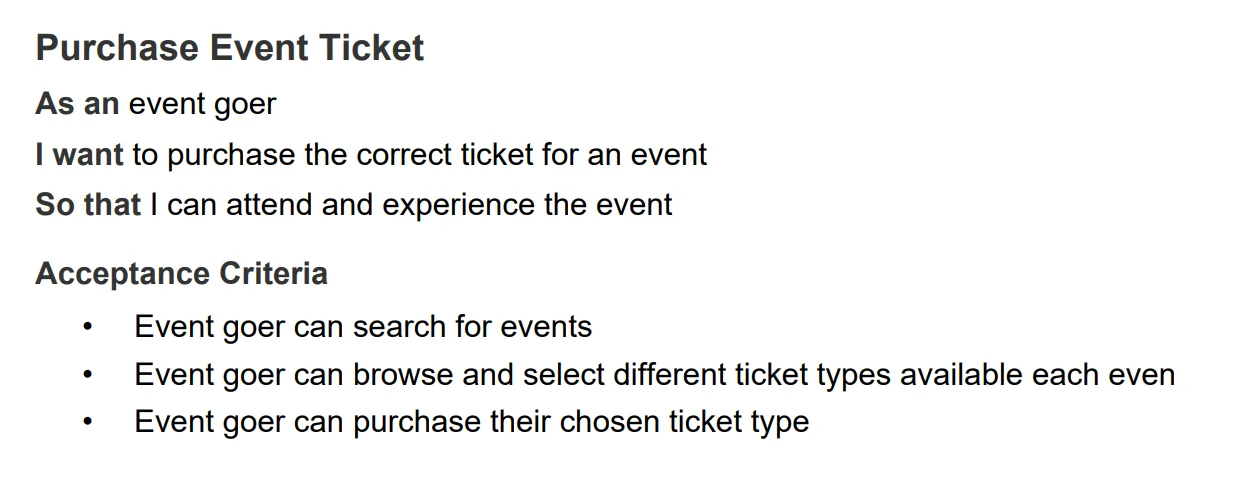
The ticket purchase story requires a user-friendly search and selection process.
We'll need to implement:
- A search mechanism for events
- A clear display of available ticket types
- A secure payment processing system
- Real-time inventory management to prevent overselling
Sales Management Features
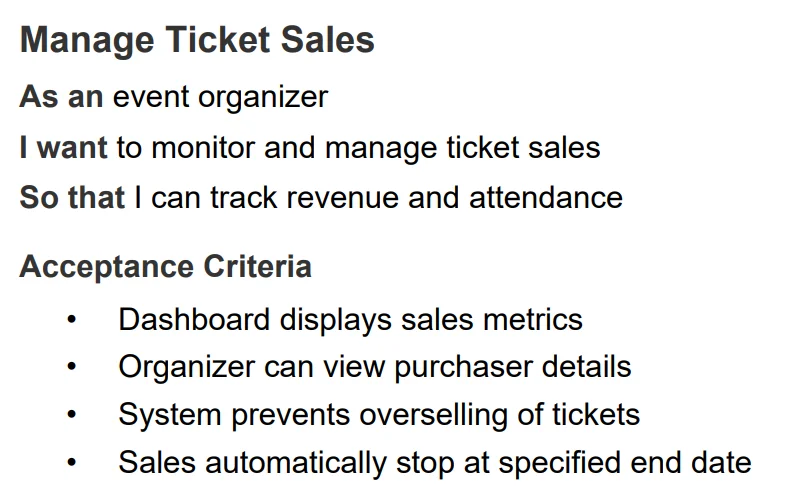
The sales management story requires comprehensive tracking capabilities.
This involves creating:
- A dashboard for sales metrics
- Secure storage of purchaser information
- Automated sales control based on quantity and date rules
Ticket Validation System
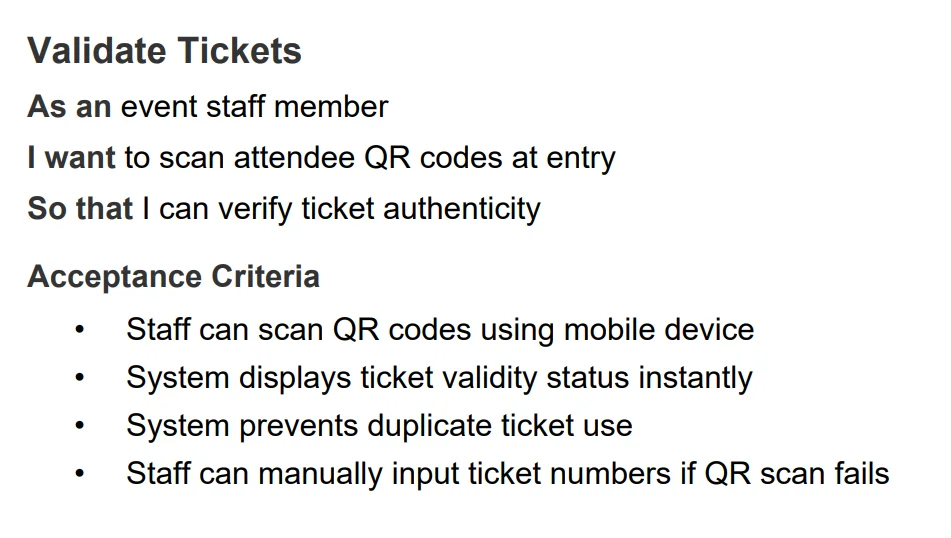
The validation story focuses on entry management at events.
Key technical considerations include:
- QR code generation and scanning functionality
- Ticket status verification
- Prevention of duplicate ticket use
- Fallback manual entry system
Technical Implementation Notes
We'll need to create RESTful endpoints for each major function:
- Event management APIs
- Ticket purchase APIs
- Sales monitoring APIs
- Ticket validation APIs
Summary
- Platform manages complete event lifecycle from creation through validation
- System serves three user types: organizers, attendees, and staff members
- Features include event setup, ticket sales, monitoring, and entry validation